

Welcome to FullStack HR, and an extra welcome to the 27 people who have signed up since last week.
If you haven’t yet subscribed, join the 11700+ smart, curious HR folks by subscribing here:
Happy Tuesday,
Back to normal schedules now, with posts on Tuesdays/Thursdays and, hopefully, guides on Saturdays. Been so-so with these guides, but it’s still my hope and aspiration!
2027 will happen sooner than we think, and if you have a project that needs help from someone with a lot of know-how at the intersection of AI and leadership for 2027.
Do reach out!
What do I do? Well beyond keynotes, here are some of the things I’ve been doing this fall;
- 1:1 CxO Coaching
(We’ve built beautiful KPI dashboards, payroll reminders, integrations with HRIS systems)
- Ambassador programs
(It’s almost like our signature program now. We train YOU to train your people.)
- Leadership programs
(How to lead with AI front and center? How do you combine AI + leadership in a practical yet ethical way?)
- Workshops
(Everything from practical agent building to AI for boards to 90 minutes on Lovable.)
All of the above are grounded in practical, pragmatic ways of doing and leading organizations! Interested? Shoot me an email!
Now, let’s get to it.
Winston Brought Friends
Around New Year, I started building my own OpenClaw agent. Some of you met him back in February. Winston, my AI employee who never clocks out.
Back then, OpenClaw was all anyone on tech X could talk about. But you needed a command line and a pretty high tolerance for risk to run it. So I told you not to build one yourself, and I wrote that I was completely convinced we’d have this type of agent, secure and reliable, within a year.
Seven months later, half of that prediction has come true. The agents are here, as consumer products, for regular people.
Secure and reliable? We’ll get to that.
Meet the friends
I ended that post by saying Winston was bringing friends. They’re here.
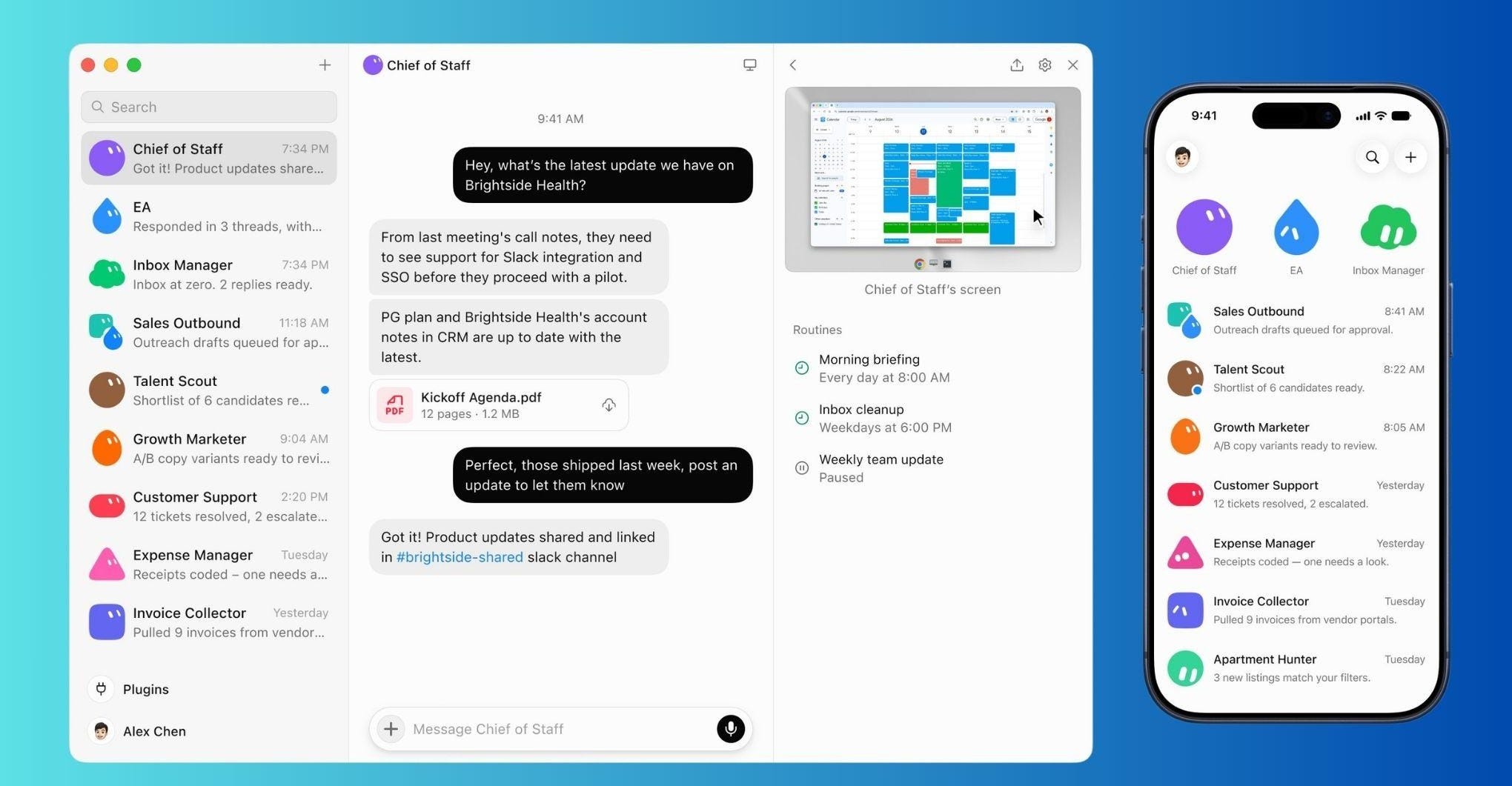
Elon Musk’s SpaceXAI launched Grok Bot in August. It gives you a persistent agent with its own cloud computer that signs into your apps and keeps working around the clock.
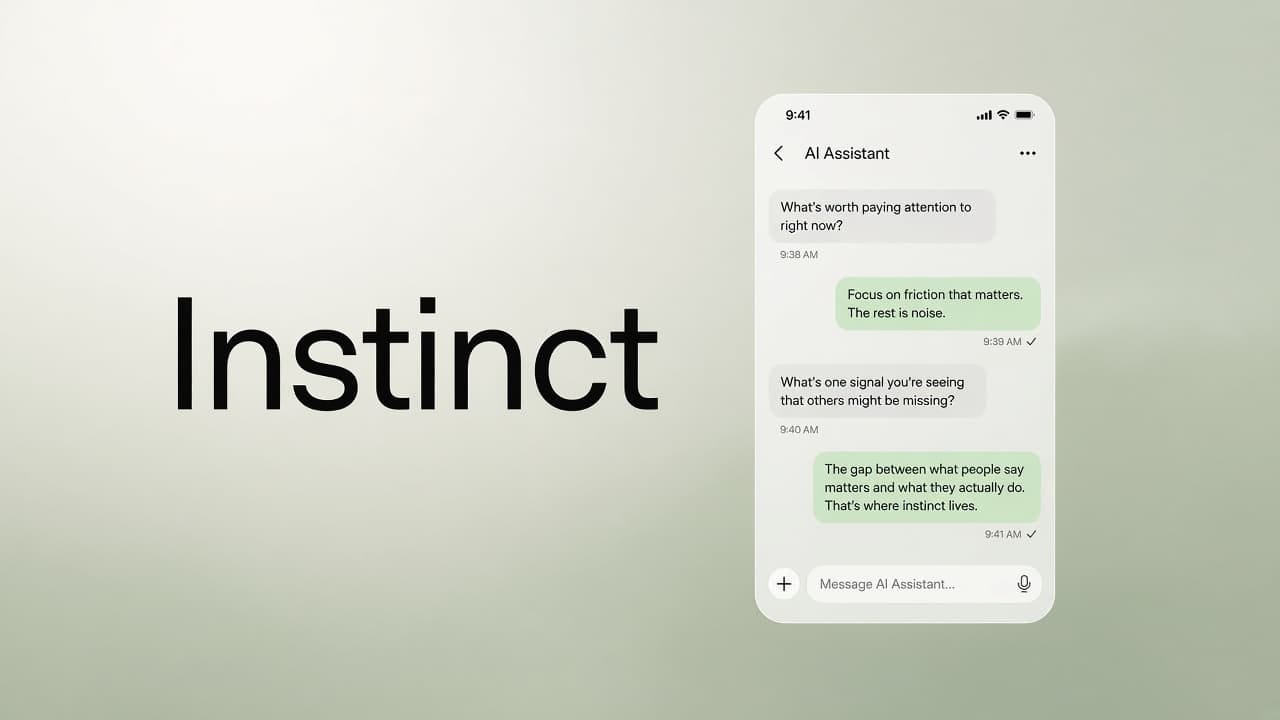
Instinct doesn’t even have an app. You text it on WhatsApp or iMessage, like you’d text a friend. It’s still invite-only, and it’s reportedly in talks to raise money at a $10 billion valuation.
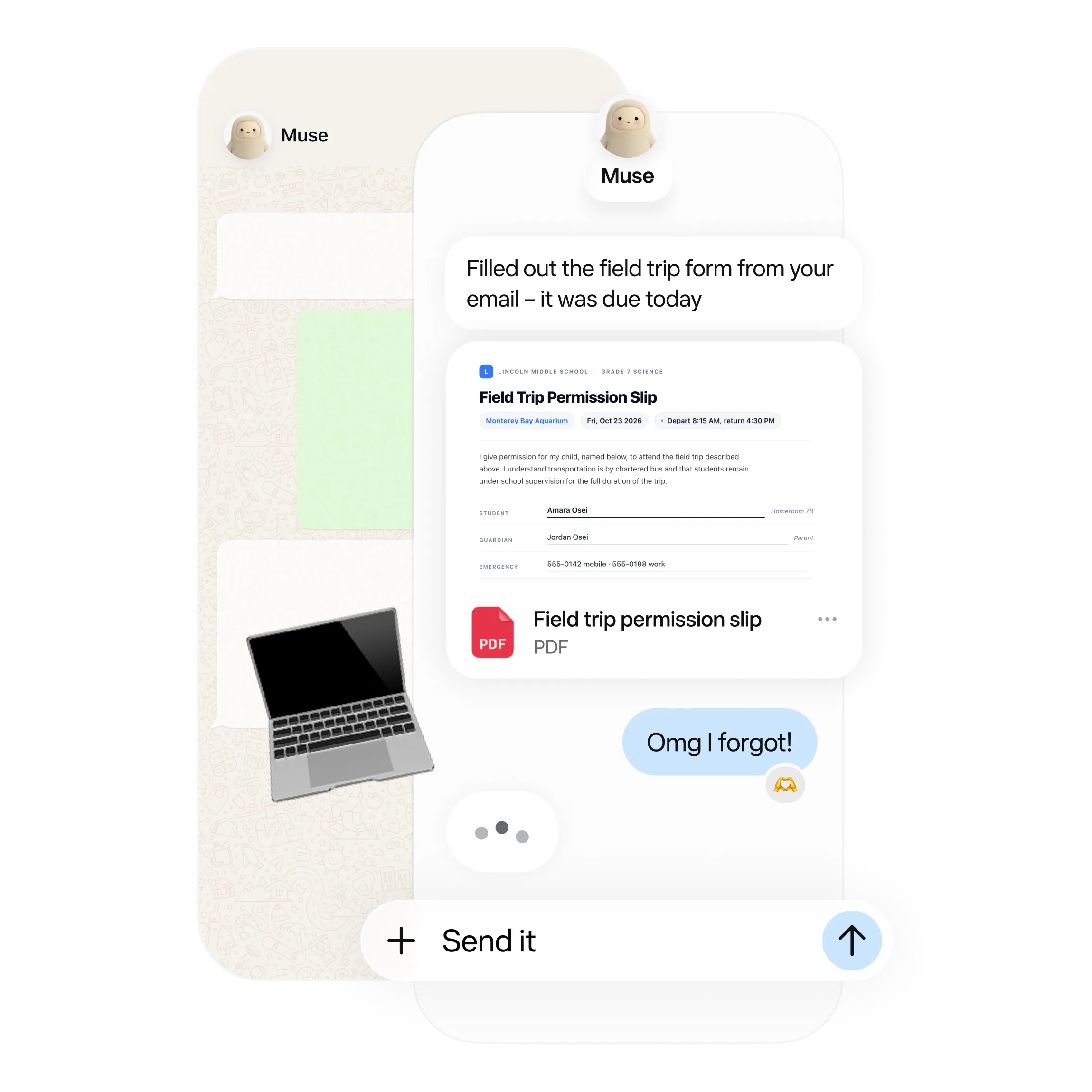
And then there’s Meta’s Muse. It launched on September 8, overtook ChatGPT as the top free iPhone app in the US within days, and passed 3.4 million downloads in just over two weeks, according to Sensor Tower.
If the rumors are right, OpenAI will show its own always-on agent at DevDay later today. (Everything points to this!)
So, simply put, the world is moving to this kind of agent, just as I predicted earlier this year.
Three agents, side by side
I’ve tried a lot of stuff along the way since Winston, Hermes Agent, among others. But for the last few weeks, I’ve been running GrokBot, Instinct, and Muse in parallel.
Which one is best? I don’t have a strong favorite. They’re more alike than different. They draw the line in different places for what they’ll do without asking, and we all have different thresholds for how much of our lives we let them into. If you limit them, they are not that powerful, but I 100% understand that people might be hesitant to invite them to see mail, calendar, etc.
What they do share is that they’re ridiculously easy to use and (if you connect them to stuff) very, very powerful. You give them a goal, they figure out the rest.
I’m going to Abu Dhabi to work with a client in a couple of weeks. When that trip landed in my calendar, all three started working, to different degrees, on getting me there and how the logistics fit together. And they all suggested booking it for me. Not “here are some options, go book it yourself.” More like “give me your credit card details and leave it with me.” (Yes, all three suggested that.)
I haven’t seen that before, not like this.
The interface matters more than we think. Instinct lives in your WhatsApp, Muse has its own app, but more importantly, as mentioned, none of them sit around waiting for you. They look at your calendar, notice what needs to happen, and suggest what they can do. You get the feeling it’s guiding you, not the other way around. (Once again, dependent on you giving them access to your digital life.)
From my phone to your workplace
Which is exactly why I think this is coming to work.
If you have something in your private life that keeps track of things and suggests what to do next, why would you settle for less at work? We saw the same movement with ChatGPT. People got used to it at home and brought the expectation with them to the office. I think we’ll see the same push from inside organizations with agents.
Here in Europe, Muse isn’t even available yet. But once your people have had an agent in their pocket for a few months, they’ll start asking why they don’t have one at work.
This is where I see the biggest obstacle. In a work context, it’s hard to let go of data and control in a good and manageable way. And these agents want a lot. Your email, your messages, your calendar to start with, but then meetings, HRIS, ERP, and CRMs as well, of course.
The early reports show why that matters. Instinct users have described an email sent without their approval and a successful prompt-injection test through email. (Winston would relate. He once sent a newsletter twice, “to be sure.”)
And it’s not just early bugs. Meta says so itself in its safety write-up for Muse. Prompt injection is still an open problem, and Muse will sometimes make mistakes.
Then there’s the data. Muse uses sanitized versions of your conversations to train Meta’s models by default, unless you find the switch and turn it off. One hands-on review found no way to turn its memory off entirely, and Muse kept nudging the reviewer to connect financial accounts, email and identity information. Instinct users have reported copies of their emails sticking around after they disconnected Google. And Instinct’s terms appoint it as your agent, authorized to enter binding agreements on your behalf.
The rest of the internet isn’t sure it wants them either. Amazon blocked Muse from shopping on Amazon.com on September 20, calling it an unauthorized AI agent. An agent that works through a browser is only as reliable as the sites that let it in.
Now move all of that into a workplace. Your agent commits to something on your behalf. Whose commitment is it? It reads a thread full of employee data, and unless someone flipped the right switch, a version of it may end up in a vendor’s training data. In Europe, that’s GDPR territory. And if a platform you depend on decides your agent is unauthorized, the process stops overnight.
And organizations aren’t exactly ahead of this. According to Deloitte’s 2026 research, only one in five companies has a mature governance model for autonomous AI agents.
So I get the hesitation, yet if the tech is there, that’s usually where people want their org to be. And despite all of this, I can see the benefit.
Imagine a leadership agent
Just think about you being a leader with your own leadership agent. It sits alongside you and proactively supports you. It doesn’t replace you as a leader. But it takes in the context and tells you when something is slipping. You haven’t had a one-on-one with two of your people in three weeks. You promised to get back to someone on Friday, and you didn’t; should I do it based on the context I have?
Like having your own personal assistant at work. I think a lot of people would like and appreciate that.
But as with all these tech tools that we will have at our disposal, that will make our leaders’ lives easier, I think it’s important to set firm guidelines for how and when to use them. To make sure the bots are trained with the organisations best, front and center. They’ll need to be built on a clear structure for what good leadership means in that particular organization.
Do that work, along with a strong data strategy, and I think we'll get better leaders out of this. (And I know that the data piece here is a hard nut to crack!)
What happens to the leader’s job?
Which brings me to the question I think matters most. How does this change what a leader does?
If an agent handles the reminders, the follow-ups and a good chunk of the admin, leaders get time back. The question is what we do with it.
One path is letting more people do more. People get more room to act on their own, and each leader takes on more direct reports. We’re already heading that way. Pave’s data shows managers averaging 4.9 direct reports in March 2026, up from 4.4 at the end of 2023.
The other path is letting managers take on more operational responsibility again. Fewer layers of coordination, more time closer to the problems and closer to the people.
Both are tempting. Both come with a price. When a manager is stretched across twelve people instead of six, coaching, feedback, and development are usually the first things to go. And a manager who goes back into operations has to protect the time for leading, or it disappears into the work.
AI frees up administrative capacity, but the need for judgment, coaching and accountability stays. (But as said last week, it might be looking different) That leadership load should determine how many people someone leads. And if your agent sends that follow-up for you, it’s still your follow-up. (I thin. Instinct might beg to differ.)
So the answer will probably differ from role to role. But it should be a choice we make on purpose. Not something that just happens because the tools showed up.
Early this year, I wrote about two things. Winston and OpenClaw, and whether an AI would be a better boss than yours. Now it feels like everyone is talking about both!
I think they’re about to become the same question.
So if you work in HR or L&D, start with something less shiny than which agent to roll out. Could you describe what good leadership looks like in your organization clearly enough for an agent to support it? And who decides what that agent gets to see?
That’s the leadership conversation we need to have this fall. Winston brought friends. Let’s give them something useful to do!